


 Contact Us At
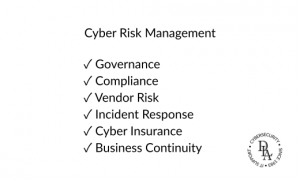
Cybersecurity risk extends beyond technology. Governance, compliance, vendor risk, and incident response planning are all essential components of a strong cybersecurity strategy.
Why Policies, Processes, and Responsibilities Matter
When organizations discuss cybersecurity, the conversation often focuses on firewalls, endpoint protection, multi-factor authentication, and other technical controls. While these defenses are essential, they represent only one component of a comprehensive cybersecurity risk management strategy.
Effective cybersecurity also depends on governance, policies, procedures, and clearly defined responsibilities.
Recent discussions within the managed services industry have highlighted the risks that can arise when expectations are not established in advance. Questions involving third-party vendor risk, compliance requirements, cyber insurance coverage, incident response procedures, and service responsibilities can become significant sources of confusion during and after a cyber incident.
Organizations should understand:
- Who is responsible for implementing and maintaining cybersecurity controls.
- How third-party vendors affect cybersecurity and business continuity.
- What role regulatory compliance and cybersecurity frameworks play in protecting sensitive data.
- How cyber incidents will be handled and communicated.
- How cyber insurance policies interact with incident response and recovery.
- Which responsibilities belong to the organization and which belong to service providers.
Cybersecurity is ultimately a combination of people, processes, policies, and technology. Strong technical defenses are important, but they must be supported by effective governance and risk management practices.
The best time to define expectations, document responsibilities, and establish incident response procedures is before a cybersecurity event occurs—not during one.
Organizations that take a proactive approach to cybersecurity governance are better positioned to reduce risk, improve resilience, and respond effectively when incidents occur.
Data-Link Associates, Inc. is a cybersecurity and IT support firm in Sugar Grove, Illinois, primarily serving manufacturing, distribution, and wholesale. Contact Angela Jamerson at ajamerson@datalinkmsp.com, or (630) 406-8969 x576
Frequently Asked Questions
What is cybersecurity risk management?
Cybersecurity risk management is the process of identifying, assessing, and reducing risks that could affect an organization's systems, data, and operations. It involves technology, policies, procedures, and governance.
Why is cybersecurity more than technology?
Strong cybersecurity depends on people, processes, and technology working together. Governance, compliance, incident response planning, and vendor risk management all play important roles in reducing cyber risk.
What is third-party vendor risk?
Third-party vendor risk refers to the cybersecurity and operational risks introduced by external service providers, software vendors, and other partners that have access to your systems or data.
Why is incident response planning important?
Incident response planning helps organizations prepare for cyber incidents before they occur. A well-defined plan can improve communication, reduce downtime, and accelerate recovery.
How do policies and procedures improve cybersecurity?
Policies and procedures establish clear expectations and responsibilities. They help organizations maintain consistency, support compliance efforts, and respond effectively to security incidents.
What is cybersecurity governance?
Cybersecurity governance is the framework of policies, processes, and oversight used to manage cyber risk and align security efforts with business objectives.
How does cyber insurance affect cybersecurity?
Cyber insurance can help organizations recover financially after an incident, but it does not replace strong security controls, effective governance, or incident response planning.
What role does business continuity play in cybersecurity?
Business continuity planning helps organizations maintain operations and recover quickly after cyberattacks, outages, or other disruptions.

